Chronic illness, two people

For couples where one of you is managing a chronic illness

This couples app gives you a short way to share that today feels rough, plus shared tasks with visible ownership. It is for the relationship side of a hard day, not medical care.

Low effort sharingFor everyday supportBaeMax is in private beta on Android.
By BaeMax LovePublished How we compare
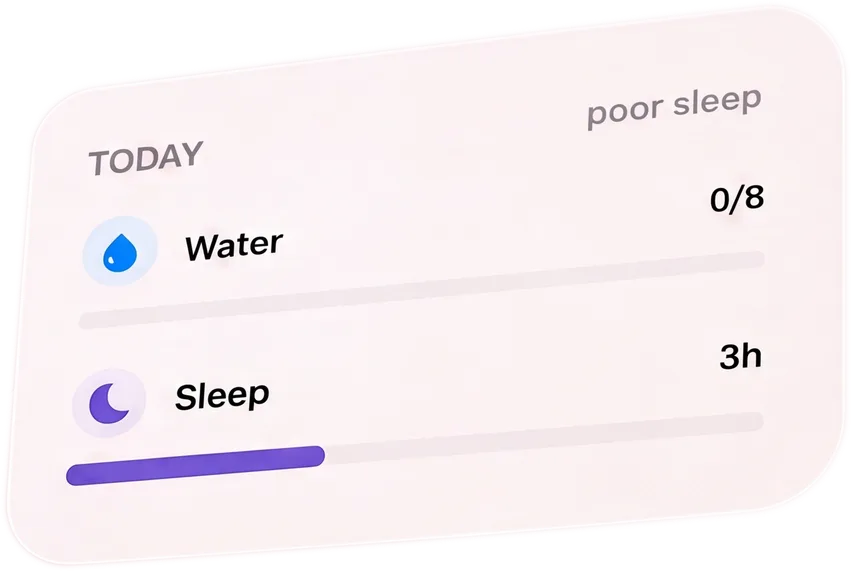
BaeMax daily health context showing water and sleep

Chronic illness puts a specific kind of strain on a relationship, not just the symptoms, but the constant translating of 'how are you' into something the other person can act on. BaeMax doesn't manage the illness. It can take some of the translating work off the table on the days there's no energy left for it. This is not a medical tool and doesn't replace care from a doctor.

Practical guide

Reduce translating work on days when you're running low

Chronic illness can make the same conversation happen over and over: how bad is today, what helps, what should change, what can wait.

What the ill partner can signal

The signal should be useful even when there is no energy for a full explanation.

  • Pain or energy level
  • Need for quiet
  • Plans that need changing
  • One task that would help

Use specific patterns without pretending every illness is the same

The app can help with everyday signals such as fatigue, pain flare, appointment day, medication side effects, food needs, quiet time or a plan that has to change. It does not explain the condition for you or decide what care is medically right.

What the other partner can do

Support works better when it turns into a concrete action instead of more questions.

  • Pick up a shared task
  • Adjust plans
  • Send a quick note
  • Respect no-touch or space preferences

Hard limit

BaeMax does not manage illness, medication, safety, or treatment.

  • Not medical monitoring
  • Not symptom interpretation
  • Not emergency support
  • Use clinicians for care decisions

Define a personal capacity language

Chronic illnesses vary, and the same person may experience different limits from one day to the next. Build labels around practical capacity rather than assumptions about a diagnosis. A low-capacity signal might mean fewer decisions, help with a meal, no touch, a changed plan, or simply patience. The ill partner chooses what a state means and can change it without having to prove symptoms.

  1. Describe what is difficult today rather than claiming what caused it
  2. Pair each state with optional help and an option for no help
  3. Keep clinical measurements in the health tool or record chosen with the care team
  4. Treat a check-in as expired after the agreed window so yesterday's capacity is not treated as current

Separate care from treatment management

A partner can prepare food, handle an agreed errand, provide transport, take notes, or offer company. Medication schedules, symptom interpretation, treatment changes, and emergency decisions require the systems and professionals appropriate to the person's condition. Do not infer adherence from a completed task or use an app notification as proof that medication was taken.

Plan for a flare without predicting one

While things are stable, list the practical changes that may help during a flare: which commitments can be moved, who should be contacted, what supplies are useful, and which signs require the person's existing medical plan or urgent care. Store emergency instructions where they can be reached reliably, not only in a couples app. Review the plan after changes in treatment, work, mobility, or caregiving.

Why people switch

Explaining a flare gets exhausting fast

Describing pain or fatigue in words, again, on a day when you have neither, is its own kind of labor.

Good days and bad days both need to be seen

If your partner only hears about it when it's bad, the texture of living with something chronic gets lost. A quick log on an okay day matters too.

The household stuff doesn't pause for a flare

Groceries and chores still need doing on a bad day, and figuring out who owns each one should not require rebuilding the whole plan.

What this looks like day to day

A quick feeling check-in instead of a description. A shared task list so either person can see what needs doing and who owns it. A quick note that says 'I'm here' without demanding a reply.

It works whether the illness is visible or not, since nothing requires explaining the condition itself, only how today feels. That can matter for invisible illnesses where the explaining is half the exhausting part.

The short version
Useful for the daily communication and task-sharing load, not a replacement for medical care or clear conversations about the illness itself.

Pick BaeMax if

  • A broad feeling signal without retelling the whole story
  • Shared tasks when the usual plan falls apart
  • Records stored on your phone with category sharing controls

Look elsewhere if

  • Not a general chronic-illness symptom tracker
  • Doesn't replace talking openly about the illness with your partner
  • Not a substitute for medical care or a care team
Key facts
Useful for
Sharing current capacity and dividing practical help
Check-in context
Feeling, sleep, water, activity and an optional note
Shared tasks
Visible ownership for small care and household actions
Person stays in charge
They choose what to log, share and decline
Medical limit
Not medication management, diagnosis, treatment or emergency monitoring
Current access
Android private beta, with iPhone in development

Common questions

is there an app for couples dealing with chronic illness that isn't a medical tracker?
BaeMax is a check-in and task app, not a general chronic-illness tracker. Its period tracker has deep cycle and symptom logs, but that is a separate use case. Use the condition-specific tools your clinician recommends for medical tracking.
can i send a rough-day signal instead of explaining a flare again?
Yes. The feeling scale can send a broad rough-to-great signal without a written explanation. If you need an explicit energy measure, you can add a custom daily tracker, but BaeMax does not interpret that as a medical symptom.
will this help my partner understand what i'm going through?
It can help with a day-to-day signal, but it won't explain a chronic illness on its own. That understanding still comes from real conversations. The app just makes those conversations easier to start.
is this trying to replace my care team or symptom tracker?
BaeMax does not diagnose, treat, or manage a chronic illness. Keep using the symptom tracker or care plan your clinician recommends. BaeMax is for the relationship side of chronic illness.

Turn the signal into something useful

Use BaeMax when a partner needs a clearer check-in, a short note, or one practical task instead of another long conversation.

Android private beta. The iPhone version is in development.