Start with consent inside the relationship
Technical encryption cannot fix coerced sharing. Both people should be able to keep categories private, decline location access and change their minds without punishment. Agree that an empty field or disabled permission does not imply secrecy. Privacy from a partner and privacy from a vendor are separate questions, and both matter.
How to suggest it without pressure
Try: 'I want a lighter way for us to share how the day is going. Would this feel helpful, or would it feel like being watched?' If the answer is no, stop there. A private couples app should never become a loyalty test.
Audit any couples app before sharing sensitive data
Use concrete checks rather than broad labels.
- Read what data is collected and why
- Find out whether records live locally, remotely or both
- Check whether partner access is all-or-nothing
- Review export and deletion options
- Protect phones with current updates and screen locks
Where BaeMax keeps your data
The main record stays on the phone. When a person chooses to share with their paired partner, that update is encrypted before leaving the device. BaeMax has no ads, data brokers, public profiles, contact upload or hidden tracking. These choices reduce exposure; they do not make a lost unlocked phone harmless.
control over each category you share matters most for sensitive context
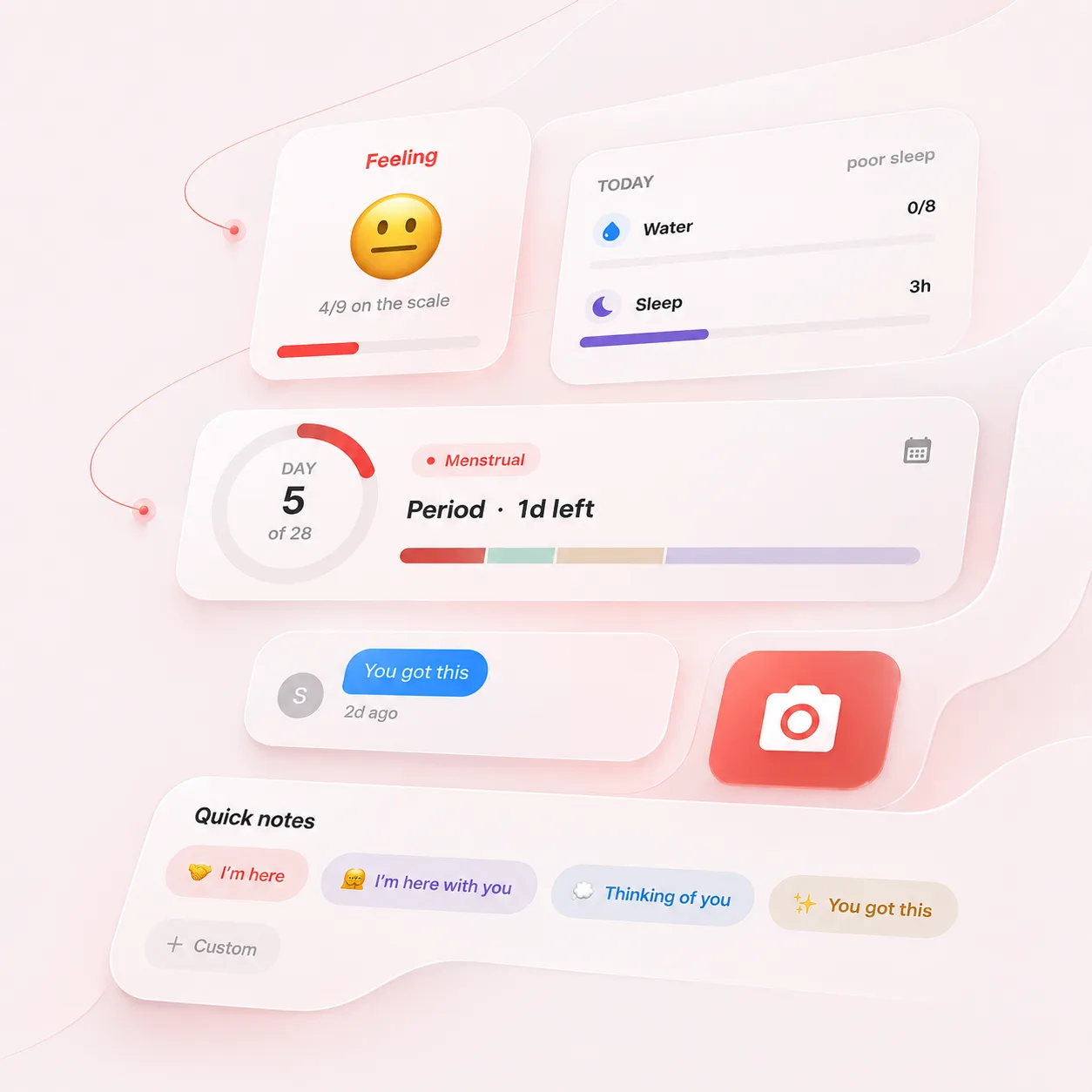
Cycle and wellbeing information can remain solo or be shared by chosen category. Optional location stays optional. Private chat is experimental and off by default. The pair model is exactly two consenting people, not a public network or follower graph.
Choose the privacy model before comparing feature lists
Choose local-first storage when keeping the readable record on your own phone matters most. An account-centered service may fit better when multi-device access and managed recovery matter more. Category controls are the deciding factor when a person will share a daily feeling but not health, intimacy or location.
Set the pair up before the first difficult day
Do the privacy decisions while neither person is asking for urgent reassurance.
- Each person chooses which categories are useful to share
- Agree that a missing check-in never proves something is wrong
- Decide which messages still belong in your regular messenger
- Test unpairing, export and device-lock settings before relying on them
- Pick one date to review whether the arrangement still feels voluntary
When the arrangement stops working
If a partner feels watched, pause sharing and discuss the expectation outside the app. After a lost phone, use its lock or remote-erase tools and review the pairing. If trust changes, unpair rather than relying on silence. The app-state export is not a full account archive or device backup.
data risks and current limits
BaeMax availability and device compatibility matter. It is not for covert monitoring, crisis alerts or proving where someone was. People facing stalking, coercion or device inspection need specialized safety advice; deleting an app may itself be visible or risky.
Plan for ordinary device exposure
Relationship data can appear outside the app through lock-screen previews, screenshots, backups, shared photo libraries, accessibility tools, or a phone handed to someone else. Review the device as well as the product. Use a screen lock you do not share broadly, choose discreet notification wording, and avoid saving sensitive exports in an unprotected downloads folder. If either person takes screenshots, agree where they may be stored and when they should be removed. These steps do not solve coercive access, but they reduce common accidental disclosure.
- Test a notification while the phone is locked
- Check whether cloud backup includes app data or exported files
- End the old pairing and review phone permissions after a device change
- Confirm how each person can revoke sharing without the other's permission
- Repeat the check after installing on a replacement phone or enabling a new backup service