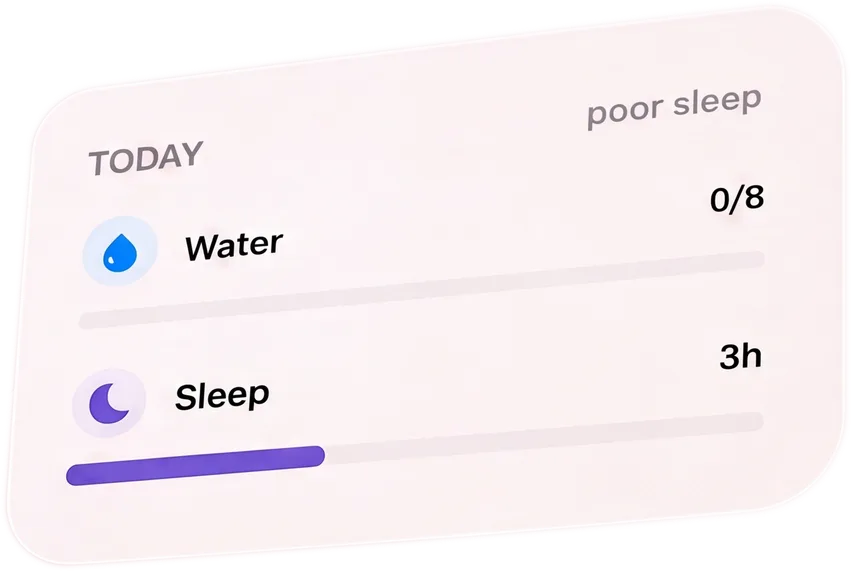
What you can define
BaeMax custom trackers let the person define the shape of the measure instead of forcing every day through a generic mood label.
- Name and unit
- Minimum, maximum, step, and goal
- Color and daily reset
- Lower-is-better option
Who creates it
The person doing the check-in creates the tracker and chooses whether it appears in a shared check-in. A partner can ask for support, but they should not define a private measure for someone else to maintain.
- Tracker owner creates the measure
- Tracker owner logs the value
- Tracker owner chooses visibility
- Partner receives context, not control
Good custom tracker examples
The best tracker is one both people understand without a long explanation.
- Anxiety 7 out of 10
- Pain 6 out of 10
- Meds 1 of 2
- Social battery 20 percent
Sharing limits
A custom number can help a partner respond, but it is not a monitor, demand, or proof of how someone feels.
- Visible custom results can appear in shared check-ins
- Meaning should be agreed together
- Numbers need context sometimes
- Not partner surveillance
Design a tracker that leads to one useful response
Before choosing the scale, finish the sentence: 'When my partner sees this, they can help by…' A pain number might lead to handling dinner; a social-battery percentage might mean fewer plans; a medication-support field might prompt pickup logistics but must not claim a dose was taken. If the number does not change a decision, it may belong in a private log or not be tracked at all. Define what the endpoints mean so a 2 and an 8 are not interpreted differently by each person.
- Use a narrow scale when fine precision would be false.
- Include an option for not logged or prefer not to share.
- Review the measure after a week for pressure or misunderstanding.
- Never turn a self-report into a target the partner enforces.