Start private, then choose what to share
Mood data belongs to the person logging it. Use the check-in privately if that is enough. Share only when the benefit is clear: fewer questions, a better support offer, or a small task the other person can take.
What can be shared
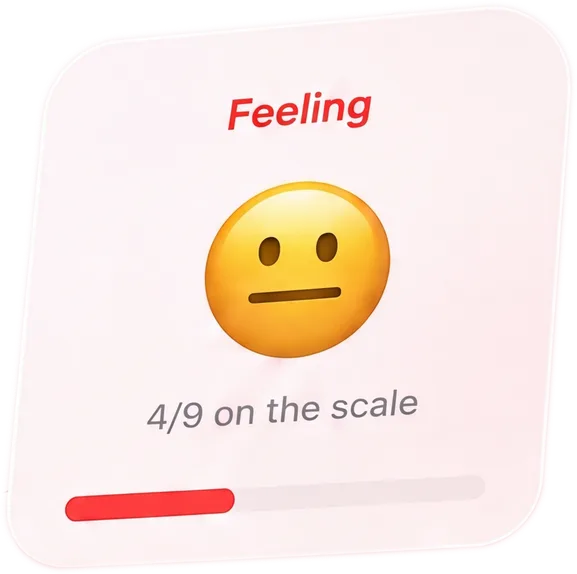
The check-in can combine mood with everyday context so the partner does not overread one number.
- Feeling
- Sleep
- Hydration
- Activity or custom trackers
Why context matters
Mood alone can be vague. A tired, hungry, low-energy day needs different support than a sad day with enough energy to talk.
- Clearer context
- Better support offers
- Fewer repeated questions
- More useful quick notes
Pick a routine small enough to keep
Try one check-in window for a week. Send only the feeling signal, or add sleep and energy when they change what support would help. A sustainable routine is one both people can miss and restart without an argument.
- Use one ordinary time cue
- Keep notes optional
- Treat a missed day as no data
- Review the routine after one week
Agree on the response before sharing
A shared mood is not a request for analysis. Agree on a short response menu: acknowledge it, offer one task, ask about company, or give space. Do not demand reasons or expect someone to infer an urgent need from a scale.
Keep the record from becoming a relationship score
Do not compare check-in frequency, turn one person's mood into a verdict about the relationship, or use old entries during conflict. If sharing creates reassurance loops or makes the sender soften answers to protect the receiver, pause it and return to private logging or conversation.
Restart after the habit fades
Ask what failed: timing, detail or the expected response. Change one thing, such as moving to rough-days-only or making acknowledgment enough. If neither person finds the shared record useful, stop. It should reduce work, not create another obligation.
Not clinical tracking
BaeMax does not diagnose mood, score mental health, or replace a dedicated journal or clinician.
- Not therapy
- Not diagnosis
- Not crisis monitoring
- Use professional help when needed
Look for context before patterns
Two people can choose the same mood label for different reasons. Add only enough context to guide today's response: poor sleep, a demanding shift, pain, social overload, or an unrelated good event. Do not turn a few entries into a theory about a partner's mental health or the health of the relationship.
- Ask whether the person wants listening, help, company, or space
- Compare your own entries over time rather than ranking each other
- Treat missing days as missing information
- Discuss any pattern with curiosity and permission
Use separate records for separate purposes
A personal journal can contain private detail and support individual reflection. A shared couples check-in should reveal only the context both people agreed is useful. Clinical symptom records belong in a dedicated health record or with a professional. Keeping these purposes separate prevents a partner-facing tool from becoming an involuntary diary or an unreliable medical chart.
Know when to stop the shared habit
Pause if entries are demanded, used as evidence in arguments, compared for effort, or monitored for gaps. Sharing should remain voluntary and revocable. When persistent mood changes, distress, or safety concerns arise, use direct conversation and qualified support rather than waiting for the chart to become clearer.