Problem, solved

How to check in on your partner without making them explain everything

Ask at a calmer moment, make room for a short answer and do not turn their answer into an interrogation.

By BaeMax LovePublished Reviewed How we compare
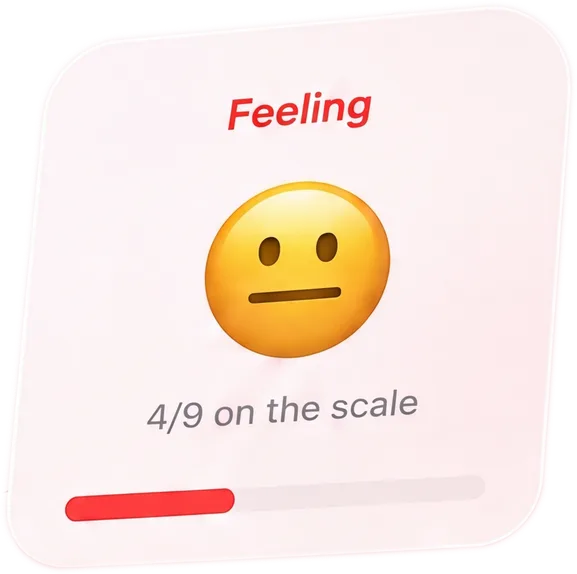
BaeMax feeling check-in scale for sharing how today feels

If you are searching how to check in on your partner, start smaller than a serious talk. Try a concrete question such as, 'Do you want listening, help with one thing, or some space?' A short answer is still an answer.

Conversation guide

A useful check-in lowers the cost of answering

Concern can feel like pressure when someone is already depleted. Better check-ins are specific, easy to decline and followed by the kind of help the person requested. An app can make routine context easier to share, but it cannot assess safety or replace direct human attention.

If safety feels urgent, do not wait for an app

Call, visit, contact someone nearby, or use local emergency or crisis services if you think your partner may be in immediate danger. A routine check-in tool is for ordinary context. It is not the place to manage a safety crisis.

Ask about the present moment, not their entire inner life

Questions such as 'What is wrong?' or 'Are you okay?' can require a summary the person does not have. Ask one bounded question instead: 'Would listening, practical help or space feel best right now?' A choice is easier to answer, and 'none of those' remains valid. Pick a neutral moment when possible; checking in during an argument can sound like a demand for emotional performance.

Use observations without turning them into a diagnosis

Try: 'You have seemed quieter since yesterday, and I care about you. Do you want company, help with dinner or some room?' This names what you observed, says why you are asking and offers concrete options. Avoid declaring what they feel or why. A partner can correct an observation; defending themselves against a diagnosis is much harder.

A five-part check-in that respects an answer

Keep the exchange small enough that answering does not create another obligation.

  1. Ask permission: 'Is now an okay time for a quick check-in?'
  2. Name one observation without exaggerating it
  3. Offer two or three types of support
  4. Accept a short answer or a refusal
  5. Do the agreed action, then avoid repeatedly reopening the question

What BaeMax can reduce

Routine check-ins can be easier when feeling, sleep, water, activity or cycle context is already recorded and selectively shared. The other person gets enough context to respond without asking for a report. Sharing remains the tracker's choice, including which categories leave their phone. This is convenience and coordination, not clinical interpretation.

You shouldn't use a couples app as a safety system

BaeMax does not diagnose depression, monitor crises or guarantee that a notification arrives. If someone may be in immediate danger, contact local emergency services or an appropriate crisis service. For ongoing distress, encourage qualified professional support without making access to care a condition for receiving ordinary kindness.

Agree on check-in rules while things are calm

Talk beforehand about how often check-ins feel caring rather than intrusive, what a delayed answer means, which information stays private and what signs require direct contact. Couples differ. One person may want a daily signal; another may prefer an explicit request. The agreement matters more than the frequency, and either person should be able to renegotiate it.

Why people switch

The question is too broad

'What is wrong?' can require a full explanation when they have no words.

Concern turns into fixing

Advice can land as pressure when the person first needed to feel heard.

Silence feels urgent

Not every delayed reply signals danger. Agree on what a real safety concern looks like outside the moment.

A useful check-in has an exit

Ask once, name a few answer options and let your partner decline. Later, follow through on the practical thing they accepted.

How BaeMax can help

BaeMax gives two people a quick feeling scale, optional context and supporter suggestions. It can reduce daily guessing, but it cannot assess risk, diagnose a condition or replace professional care.

The short version
Use an app for routine context, not for emergencies.

Pick BaeMax if

  • Quick check-ins can lower the effort of answering
  • Sharing controls let the person choose what leaves their phone

Look elsewhere if

  • Direct conversation is still necessary
  • Professional and emergency support must stay outside the app
Key facts
Best first move
Ask at a calm moment and leave room for a short answer
What BaeMax adds
A consented feeling check-in that can be shared with one partner
What stays private
Unshared entries and categories remain on the sender's phone
Good response
Acknowledge the signal, then offer one specific kind of help
Important limit
Not therapy, diagnosis, treatment or crisis monitoring
Current access
Android private beta, with iPhone in development

Common questions

how do i ask if my partner is okay without annoying them?
Pick a neutral moment and ask one specific question. Offer choices such as listening, practical help or space, then accept the answer without repeatedly checking.
what if they keep saying fine but clearly are not?
Describe what you notice without diagnosing them, then state your concern once. You can keep the door open, but you cannot force disclosure. If you believe there is immediate danger, contact local emergency services or a crisis service.
can BaeMax tell me if my partner is depressed?
BaeMax is not a diagnostic or mental health screening tool. It only shows information the other person chooses to share and offers general, easy to decline support ideas.
does the app alert me if something is seriously wrong?
You shouldn't rely on BaeMax for crisis or emergency monitoring. Notifications and shared signals depend on devices, permissions and network availability. Use professional or emergency channels for urgent safety concerns.
can we do these check ins if one of us has an iPhone?
Not with BaeMax today. BaeMax is in private beta on Android, with iOS in development. You can still use the question format in a normal conversation or established messenger.

Turn the signal into something useful

Use BaeMax when a partner needs a clearer check-in, a short note, or one practical task instead of another long conversation.

Android private beta. The iPhone version is in development.